
Snana Yatra- The appearance day of Lord Jagannatha
11 JUN, 2025
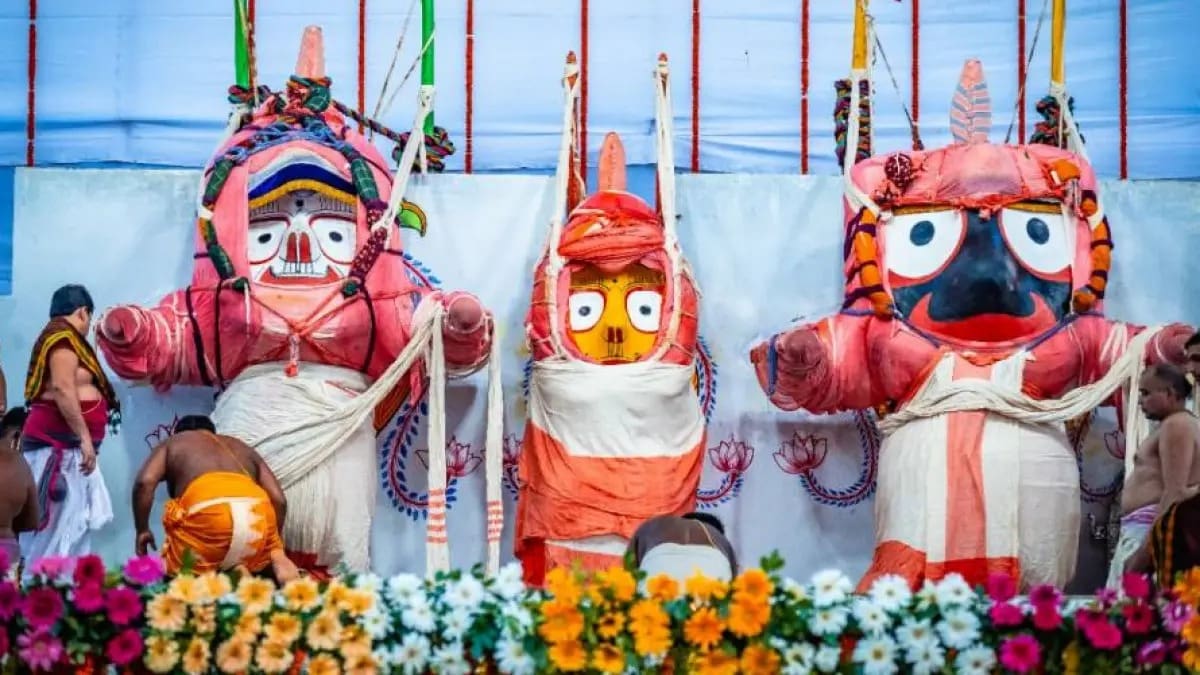
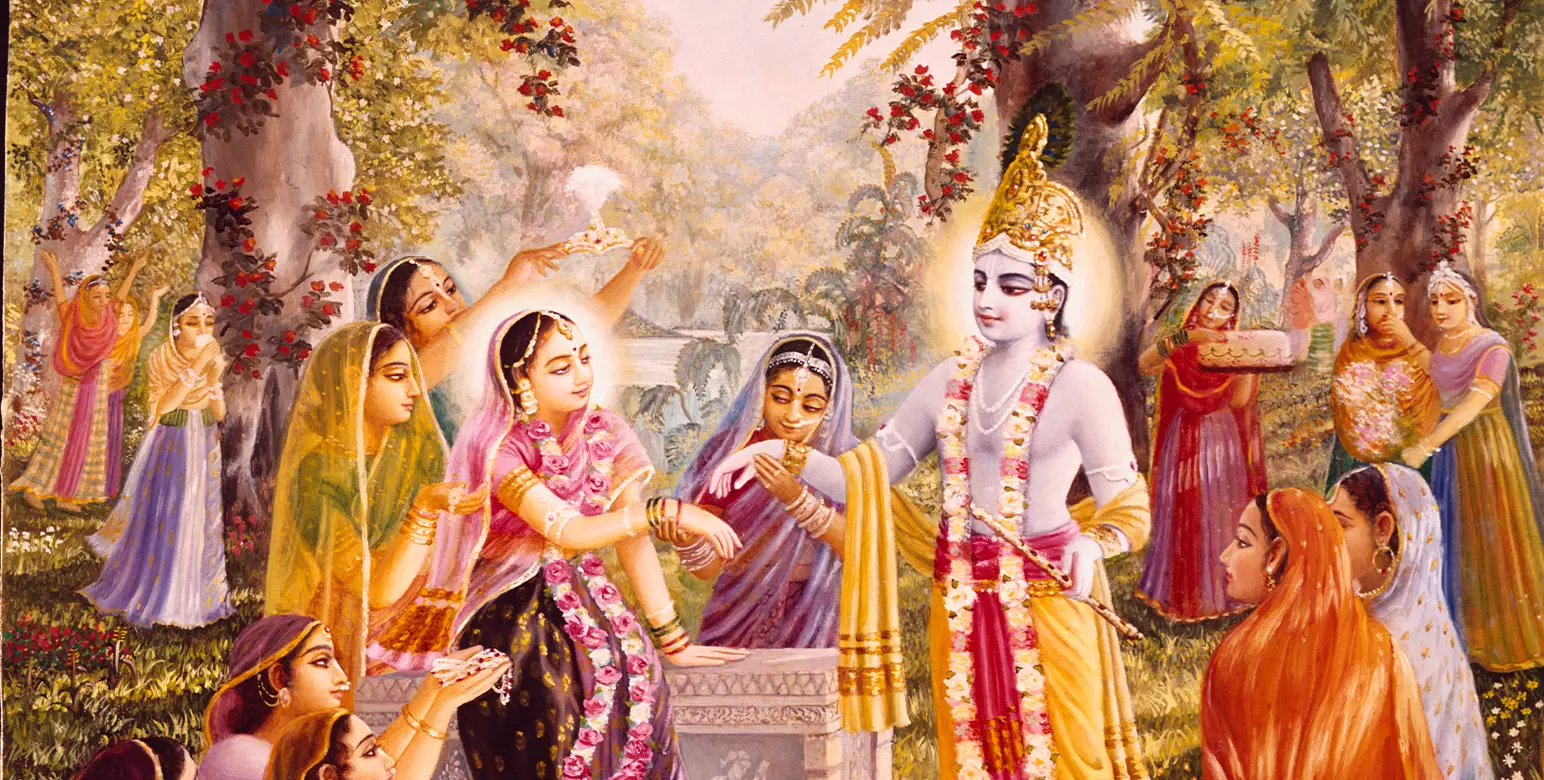
Lord Jagannatha is Krishna himself, but in the mood of separation from the devotees of Vrindavana. When in Dwaraka, Krishna heard his pastimes of Vrindavana being narrated to his wives. He felt intense separation from the devotees of Vrindavana and exhibited his form as Jagannatha, where his eyes became big, his mouth remained open, and his limbs were inserted inside the body in ecstasy.
Lord Jagannatha, the Lord of the Universe, appears on the day of Jyeshtha Purnima, also known as Snana Purnima or Snana Yatra. On this day, Lord appeared in the material world. In general terms, many say that Snana Yatra is the birthday of Lord Jagannatha, but that is not the correct way. As birth and death are related to the material body, so they can’t be used in relation to the Lord, who has a spiritual body. The appearance day of the Lord provides us with the opportunity to serve him through many processes of devotional service.
As Janmashtami is the appearance day of Krishna, Rama Navami of Sri Rama, and Narasimha Chaturdashi of Sri Narasimha Deva, in the same way Snana Yatra is the appearance day of Lord Jagannatha. But Lord Jagannatha didn’t appear as a person like Krishna, Sri Rama, or Narasimha Deva, but he manifested himself in the form of a deity.
The advent of Jagannath begins in Satyuga, when Lord Jagannatha was present in the form of ‘Neelmadhav.’ King of Avanti, Indradyumna, a pure devotee who ruled the state considering himself a servant of Krishna, had an intense desire to see him. When he came to know about Neelmadhav, he sent his trusted minister Vidyapati to find out the exact location. Lord Neelmadhav was secretly situated in Nilachala, in the massive forest alongside the gigantic ocean, present-day Puri in Odisha. Vidyapati was lost in this massive forest and sought help from a Shabar tribesman, Vishwavasu. Vishwavasu was the only person who knew the whereabouts of Neelmadhav. The Lord was extremely pleased with the service of Vishwavasu and would only accept service from him. When Vidyapati took darshan of the Lord, he was satisfied at his very core. Sent by the king to find the deity Neelmadhav, Vidyapati had finally discovered the divine presence of the Lord. Overwhelmed with joy, he returned to the king and excitedly recounted all that had happened, then led him to Nilachala.
Unfortunately, just as King Indradyumna arrived at Nilachala, the Lord had already disappeared, leaving him devastated. The very Lord to whom Indradyumna had dedicated his entire life, the One he longed to behold with such eagerness, had become unmanifest at the moment of his arrival. This left the king deeply disheartened. But the Lord revealed His plans to Indradyumna by appearing in his dreams. The Lord told Indradyumna to not get discouraged and that He will now appear in the form of ‘Daru Brahma,’ meaning in wooden deities as Jagannatha, along with his brother Baladeva, little sister Subhadra, and Sudarshana. Hearing this, the king was immediately uplifted. He discovered the wooden log floating in the sea with an enchanting aroma, had it pulled ashore, and Vishwakarma, disguised as an elderly sculptor, began carving it. However, he set a strict condition—no one was to enter while he worked for fifteen days. If anyone did, he would leave immediately, even if the process remained unfinished. Fifteen days had already passed, yet the sculptor had not come out. Growing anxious, the king entered the place, but just as the old sculptor had warned, he immediately left, leaving the work unfinished. Overcome with regret, the king realized that his impatience had prevented the carving from being completed, filling his heart with sorrow. Immediately, Narada Muni appeared at that place and assured Indradyumna that this was the most complete, beautiful, and merciful form of the Lord and there was nothing to be worried about, and he advised the king to now do the installation of these deities of the Lord. Soon, the installation was done, on Purnima in the month of Jyeshta. Since that time, the festival of Snana Yatra has been celebrated.
Even today the festival of the Snana Yatra is celebrated with great pomp and fervor with strict adherence to tradition. And the sacred regulations have been passed down seamlessly through generations. As the deities of the Lord are wooden, it is not possible to bathe them every day; hence, the reflections of the deities in the mirror are bathed daily instead of the deities themselves. So, the deities are only bathed once a year on the day of Snana Purnima. The deities wearing silken clothes and smeared with auspicious red powder are carried in a procession to a bathing platform, or Snana Bedi, in Snana Mandapam, which can even be watched from outside of the temple. The preparation begins on Chaturdashi itself. The water from only the particular well in the temple complex ‘Sona Kua’ is fetched in one hundred and eight pots and then purified by the Vedic chants and auspicious ingredients like haldi, sandalwood, perfumes, whole rice, and various types of herbs. With great love and chants of ‘Jaya Jaya,’ the Lord is bathed with cold water from Sona Kua.
This cold-water bath makes the Lord become sick, causing ‘Anavasara-Parva,’ the time where the Lord doesn’t give darshan for fifteen days, during which he is served with medicinal portions to recover rapidly. On the sixteenth day, the deities make their first divine appearance after getting completely recovered, bringing immense joy and devotion among the devotees in the Festival of Netrotsava. Adorned with fresh paint and decorations, the youthfulness is renewed, and hence it is also called ‘Nava Yauvanam.’ After the period of rest and recovery is completed, the Lord is all set to ride his chariot and march towards the Gundicha Temple, for Rath Yatra.
The Lord appears in the form of a deity to give us opportunities to engage in his service. This way, one develops love for the Lord and is eligible for liberation from the cycle of birth and death. This time the Snana Yatra is on 11th of June, let us celebrate it by engaging and strengthening our devotion to the Lord.