
Preparing for Lord Jagannatha’s Arrival – The Significance of Gundicha Marjana
24 JUN, 2025
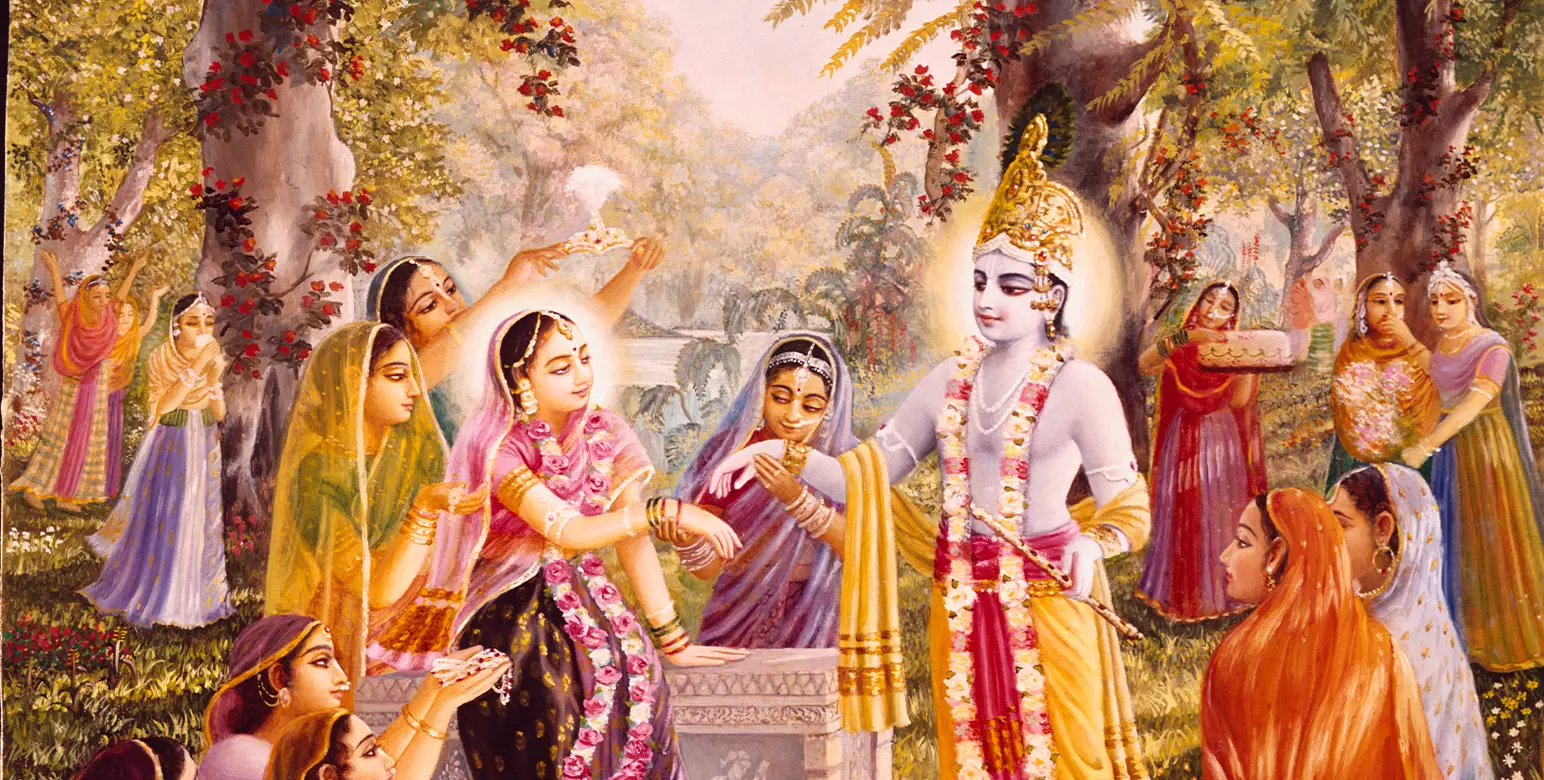
Gundicha Marjana is the sacred cleansing of the Gundicha Temple that takes place just before Lord Jagannath arrives there after His Rath Yatra. Five thousand years ago, when Krishna and all the residents of Vrindavana met after a long separation at the land of Kurukshetra, they wished to take Krishna back to Vrindavana to relive the divine pleasure they had once experienced. In their eagerness, they began to pull the chariots of Krishna and Balaram. This act of love is celebrated today as Rath Yatra.
The Gundicha Temple is considered symbolic of Vrindavana, and during Rath Yatra, the chariots of Jagannatha, Baladeva, and Subhadra are pulled there. It is located at the other end of the Grand Road in Jagannath Puri, about two kilometers away from the main Jagannath Temple. One day before their divine arrival, the temple is thoroughly cleaned with immense love and devotion to welcome the Lords.
The Pastime of Gundicha Marjana
It was Sri Chaitanya Mahaprabhu who began the tradition of cleansing the Gundicha Temple. Mahaprabhu is Lord Krishna Himself in the form of a devotee. Through His own example, He taught the highest standard of devotion and surrender to the Supreme Lord.
Out of strong desire to welcome Lord Jagannatha, Mahaprabhu approached the temple superintendent along with His associates to seek permission for the cleansing. The temple superintendent who knew that Lord Chaitanya is the Supreme Lord himself, very humbly said that ‘the Lord is free to do anything and does not need permission from anyone and offered his full assistance.’ He arranged for a hundred brooms and water pots, which were handed over to the Lord.
Enthusiastic participation of Devotees
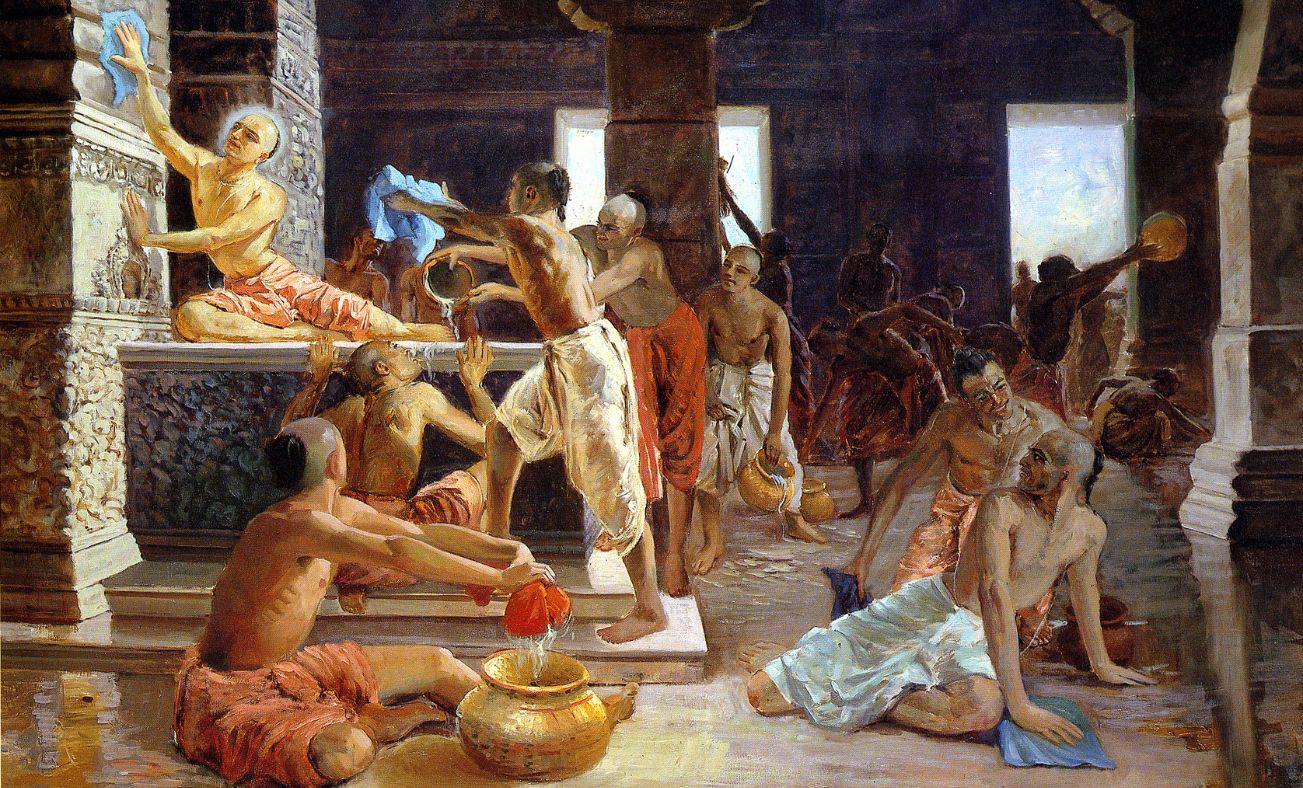
As the news spread, the devotees enthusiastically gathered for the service. Mahaprabhu personally applied Chandan on their foreheads, offered garlands, and distributed the brooms, inspiring each one. The cleaning began with sweeping, following a meticulous order—walls and ceiling first, to avoid cleaning the floor again. Mahaprabhu Himself cleaned the throne and altar of Jagannatha, Baladeva, and Subhadra. The Kirtan Mandapa, main hall, and Bhoga Mandapa were also cleaned.
Mahaprabhu, covered in dust from the service, looked even more attractive—captivating the hearts of everyone present.
All the dust was collected and placed outside the temple. Mahaprabhu personally inspected the dust piles and astonishingly, His collection surpassed the total gathered by all the devotees. He also guided those who needed help, offering personal training with patience and love. After sweeping, they began washing the temple in the same sequence. Water was splashed on the ceiling and walls first, allowing the dripping water to clean the floor simultaneously. This efficient method reflected the Lord’s emphasis on resourcefulness. Water was fetched from a nearby source, and some devotees stood at the entrance with pots so the cleaning could continue without delay.
Serving Together in Harmony
Occasionally, there were conflicts during the service, but because the devotees were constantly chanting “Krishna Krishna”, no disputes arose. When someone slacked in their service, Mahaprabhu or the senior devotees would correct them with love. These corrections were accepted positively—there were no grudges. Along with correction, appreciation was offered to those performing their duties well. Once the cleaning was complete, devotees rested briefly and then gathered for Kirtan, joyfully chanting the holy names of Lord Hari.
What’s in it for Us?
This divine pastime offers us many timeless lessons—applicable not only in our spiritual lives but also in our daily lives. Mahaprabhu’s leadership is visible in all that was done. He personally distributed brooms and water pots, applied Chandan, and offered garlands, inspiring his followers by his own example.
He taught efficiency, resourcefulness, and respect for God’s property—ensuring nothing was wasted. He trained those facing difficulties, offered constructive correction, and always balanced it with appreciation for good work.
Spiritually, we learn that while personal service to the Lord is joyful, serving alongside devotees, in cooperation and humility, pleases the Lord even more. Not everyone may get the opportunity to perform deity worship directly, but participating in Gundicha Marjana is non-different—cleansing the Lord’s temple is itself a part of worship.
Purification through Devotion
After the Marjana, Lord Chaitanya made the entire temple shine like His own heart. In the same way, by His mercy, we too can feel the cleansing of our hearts. During this event, the Lord served with the strength and enthusiasm of a hundred men, and His devotees wholeheartedly engaged their mind, body, and words in service. Though this may seem a humble or insignificant task, it is the kind of service that pleases the Lord. Menial service attracts the attention of the Lord.
Cleansing the Temple within
As the pastime of Gundicha Marajana symbolizes the purification of one's consciousness, we too can experience the profound purification of mind and heart by following in their footsteps. As we welcome Lord Jagannatha, Balarama, and Subhadra on June 26th this year, let’s also prepare a clean, loving space within, just like Mahaprabhu did.