
Jagannath Rath Yatra: A Step Closer to the Divine
27 JUN, 2025
What is Rath Yatra?
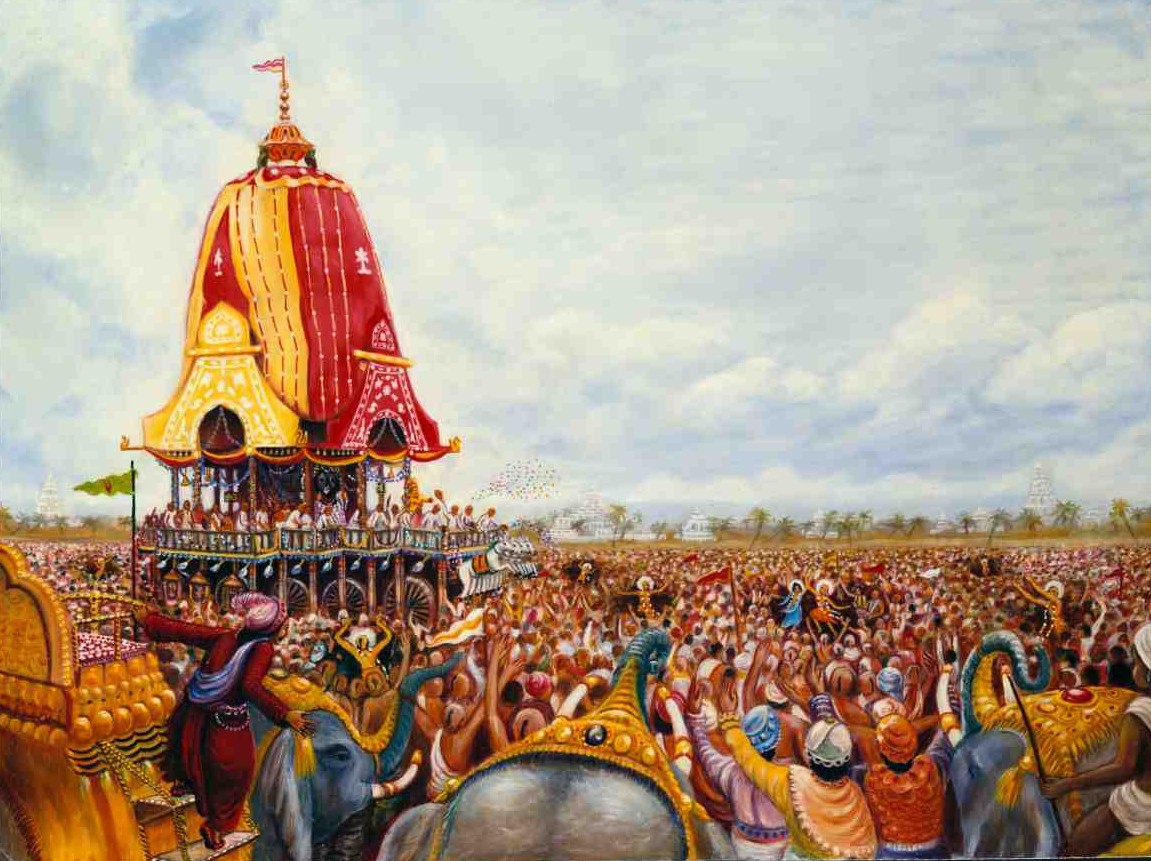
Rath Yatra is the annual car festival of the deities of Lord Jagannath, Balabhadra and Subhadra, celebrated magnificently. The devotees lovingly pull the chariots to the Gundicha temple, situated at the other end of the Grand Road in Jagannath Puri, about two kilometers away from the main Jagannath Temple. The Lord stays there for seven days and then returns to the Jagannath Temple in a similar grand procession, called as Bahuda Yatra.
Rath Yatra is celebrated on various occasions for different deities and locations, but Lord Jagannath’s Rath Yatra is one of the most unique among all. The main deities themselves depart the temple during Lord Jagannath's Rath Yatra, which is distinct from other temples where only the Utsav Vigraha come out.
Why is Rath Yatra celebrated?
When Lord Jagannath had appeared to satisfy King Indradyumna's intense desire, He granted the King a special boon. As per the King’s own wish, he would have no future descendants. The King desired that no one from his lineage should ever claim ownership over the Lord’s temple, keeping it solely for the service of the Lord and His devotees. When Queen Gundicha was heartbroken knowing this, Lord Jagannath promised to be her son and come see her annually during Rath Yatra, spending seven days with her.
Celebration of Rath Yatra
The Jagannath Rath Yatra celebration continues to this day, upholding the promise made to Mother Gundicha. On Aksaya Tritiya, the chariots' construction marks the beginning of the Rath Yatra preparations. The chariots are constructed by hundreds of carpenters, painters, and artists. Each chariot has specific requirements, which they carefully follow.
The celebrations start after the chariots are prepared. Once Lord Jagannath has recovered from the cold due to His Snana Yatra bath, he comes out in a grand procession known as Pahandi Vijaya wearing silk clothing and a floral crown (Tahia). The King of Odisha, Gajapati, humbly sweeps the path with a golden broom and sprinkles sandalwood-scented water as the Lord is led gently to His chariot. The chariots then begin their journey to Gundicha Temple. During the seven days stay, various celebrations take place, including Hera Panchami, where Mother Lakshmi visits Jagannath with her maidservants. This is how the Rath Yatra is celebrated with great devotion and fervor.
What are the benefits?
According to the scriptures, one should participate by pulling the chariots, chanting, and dancing. Doing so washes away the sins of past lifetimes and grants liberation from the cycle of birth and death. The dust, air, and Lord Jagannath’s glance during the Yatra are purifying. Taking darshan at Gundicha Mandir is also highly auspicious.
How can one celebrate Rath Yatra?
§ Visiting Puri Dham, join the celebration, and offer prayers
§ Reading about Lord Jagannath’s pastimes
§ Making offerings of Odiya delicacies
§ Creating a miniature Rath
§ And arranging a local Rath Yatra
Srila Prabhupada’s impact on Rath Yatra
During the Rath Yatra, people from diverse social and spiritual backgrounds come to take darshan of Lord Jagannath on His chariot. We can realize that the world can only get united by keeping the Lord at the center. Srila Prabhupada, the founder Acharya of ISKCON, knowing this, took Jagannath Rath Yatra to the foreign lands, and today Rath Yatra is arranged in over hundred countries across every corner of the world.
Lord’s special mercy during Rath Yatra
The merciful Lord Jagannath permits everyone, from all backgrounds, to see Him, during the Rath Yatra, even though the temple only permits Hindus to darshan. The Lord of the Universe, Jagannath, lives up to His name by attracting devotees from all over the world with His affectionate and reciprocative personality. Until recently, anyone—regardless of qualification, religion, or nationality—could approach and even embrace the Lord. While strict worship standards are upheld by pujaris on regular days, during Rath Yatra, all were welcome.
Let’s move a step closer
Rath Yatra is celebrated on Ashadha Shukla Dwitiya, which falls on June 27th this year. The Patita-Pavana, the purifier of the fallen, Lord Jagannath, emerges from His temple to meet His devotees. He provides us with innumerable chances to think of Him, remember Him, and deepen our love for Him through festivals. The ultimate objective is to deepen our relationship with Krishna. We only need to move closer now that the Lord has reached us.